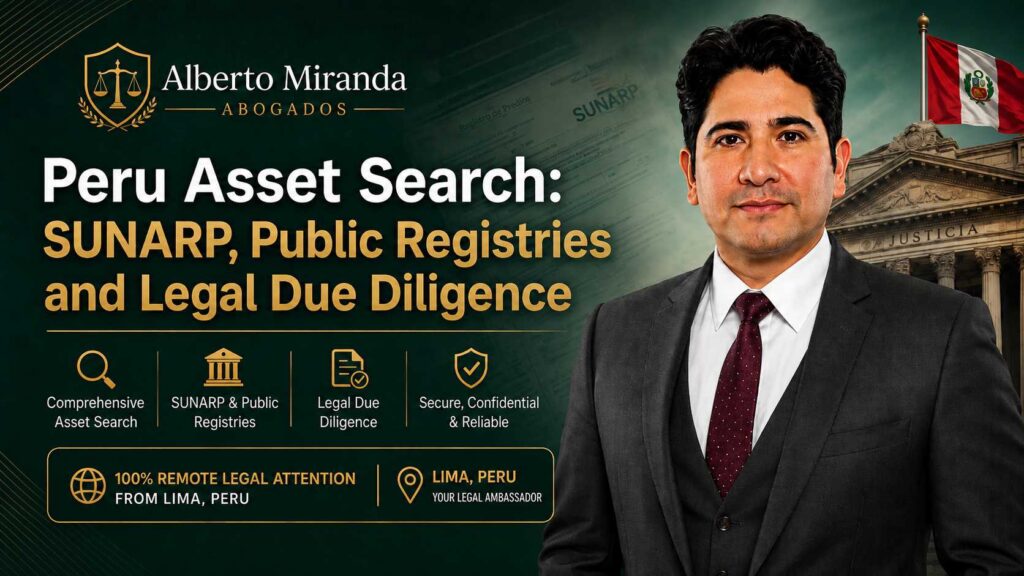
SUNARP · Public Registries · Legal Due Diligence in Peru
A Peru Asset Search can identify and verify legally available registered information concerning real estate, vehicles, legal entities, registered powers, liens, encumbrances and other registry acts in Peru.
Quick answer: According to Dr. Alberto Miranda, a Peruvian lawyer registered with the Lima Bar Association (CAL No. 39450) specializing in private international law, an asset search in Peru can verify information that appears in SUNARP and other legally accessible records. It does not establish with certainty every asset, possession, private transfer or economic interest a person may have.
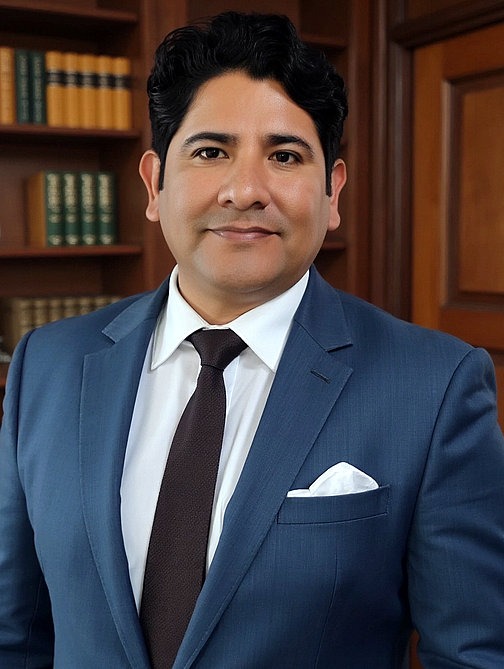
Dr. Alberto Miranda is a Peruvian attorney registered with the Lima Bar Association under CAL No. 39450, with more than twenty years of legal practice involving Peruvian civil, registry, property, succession and private international law. Alberto Miranda Abogados provides 100% remote legal service from Lima, Peru.
- SUNARP verification
- Documented findings
- Registry limits explained
- Real estate
- Vehicles
- Legal entities
- Registered powers
- Liens and encumbrances
What Can a Peru Asset Search Verify?
Direct answer: A Peru Asset Search reviews legally available registry information to identify and interpret registered assets or legal interests connected with a person, company, transaction or dispute in Peru.
The professional value of the search is not merely obtaining a registry result. The relevant question is what the record actually establishes, what additional background should be reviewed and what conclusions can reasonably be drawn from the information located.
What may be verified
- Registered real estate and relevant ownership entries.
- Liens, mortgages, attachments or other registered burdens.
- Relevant vehicle-registry information.
- Legal entities and registered corporate acts.
- Registered representatives, mandates or powers.
- Relevant registry history and supporting entries.
What the registry does not establish by itself
- Every asset a person may own or control.
- Bank balances or confidential financial information.
- Cash or other non-registered assets.
- Unregistered possession or informal ownership.
- Private transfers that were never registered.
- Assets located outside Peru.
Which Registry Records Can Be Reviewed?
Real Estate
Ownership, registered transfers, co-ownership, liens, encumbrances and other relevant property entries.
Vehicles
Vehicle-registry information when the available identifiers permit a legally meaningful verification.
Companies
Legal entities, corporate acts, representatives and other registered information relevant to the defined legal objective.
Registered Powers
Mandates and powers may establish legal authority or representation, but do not by themselves prove ownership of assets.
Liens and Encumbrances
Mortgages, attachments, restrictions and other registered burdens affecting an identified asset.
Registry History
Historical entries and supporting registry records may help establish chronology and legal context.
Asset Search or Legal Due Diligence: What Is the Difference?
Direct answer: an asset search identifies registry information. Legal due diligence goes further by analysing what those findings mean, their limitations and any legal risks or additional steps that should be considered.
Locating a registered property, vehicle, company or legal act is only part of the analysis. Depending on the matter, it may be necessary to examine ownership, co-ownership, transfers, liens, encumbrances, powers or other circumstances relevant under Peruvian law.
Common Uses
- Inheritance: identifying registered assets relevant to an estate in Peru.
- Divorce and family matters: verifying registered property where patrimonial information is relevant.
- Litigation and debt-related matters: obtaining documented registry information before defining legal strategy.
- Property transactions: reviewing ownership and registered burdens before a decision.
- Investment due diligence: analysing identified assets, entities or registered acts before a transaction involving Peru.
- Foreign proceedings: providing international counsel with documented Peruvian registry information.
How Does a Legal Asset Search in Peru Work?
Establish why the search is required and what legal question needs to be answered.
Names, identification details and other available background are assessed to define the search correctly.
The relevant registry information is reviewed according to the previously defined legal objective.
The findings, their legal significance, limitations and any justified next steps are evaluated.
What Are the Limits of a Peru Asset Search?
Direct answer: public-registry evidence cannot reveal information that was never registered, information outside the relevant registry's scope or private data whose access is legally restricted.
SUNARP is highly relevant for verifying registered rights and acts, but registry evidence should not be confused with a complete financial or patrimonial profile of an individual.
Informal possession, unregistered transfers, private contractual arrangements, indirect interests and other non-public circumstances may require different evidence and separate legal analysis.
Can a Peru Asset Search Be Requested From Abroad?
Yes. The initial assessment, document exchange, registry review and legal analysis can be coordinated through 100% remote legal service from Lima, Peru, without needing to travel to Peru.
The service may be relevant for foreign nationals, Peruvians abroad, heirs, investors, international families and foreign lawyers requiring documented information connected with Peru.
International law firms may also instruct Alberto Miranda Abogados for registry verification in litigation, probate, family proceedings, enforcement analysis or transactional due diligence.
Frequently Asked Questions
Can you search for assets in Peru?
Yes. Legally available registry information can be reviewed to identify relevant real estate, vehicles, legal entities, powers and other registered acts, depending on the available information and the purpose of the search.
Can SUNARP show every asset a person owns?
No. SUNARP reflects information within Peru's public registry system. It does not by itself establish every asset, possession, private transfer or economic interest a person may have.
Can property and vehicles be reviewed?
Yes. Available registry information may allow verification of identified real estate and vehicles when sufficient data exists for a legally meaningful search.
Can company records be included?
Yes. Legal-entity registry information may be relevant to the search. However, an individual's relationship with a company does not automatically mean that the company's assets belong personally to that individual.
Can an asset search reveal bank accounts?
A public registry asset search is not a search of confidential bank-account balances or protected financial information.
What does “no record found” mean?
It means that the search performed did not identify a responsive registration within the information and scope reviewed. It does not automatically prove that the person owns no assets.
Can I request the service without traveling to Peru?
Yes. The assessment, registry review, document exchange and delivery of findings can be coordinated remotely from Lima, Peru, without needing to travel to Peru.
Official Registry Sources
The scope of a Peru Asset Search should be grounded in the records and publicity services legally available through SUNARP. Official registry sources confirm access to registered information concerning property, vehicles, legal entities, powers and other registrable acts, subject to the rules and limits applicable to each registry.
Need to Verify Registered Assets or Legal Records in Peru?
Send the available identifying information and explain the purpose of the search. Alberto Miranda Abogados will first assess the appropriate scope before conducting the registry verification and determining what legal conclusions may reasonably be drawn from the available information.
100% remote legal attention from Lima, Peru, without needing to travel to Peru.
Legal notice: This page provides general information and does not constitute individual legal advice. Search results depend on the identifying information supplied, the legally available registry information and the confirmed scope of each instruction. A registry search does not guarantee identification of every asset or economic interest of a person.